
Cicatricial Alopecia
Also known as Scarring Alopecia, and its impact.
Over the years working behind the chair, I’ve met many clients worried about their hair thinning or falling out. Most of the time, hair loss is temporary and can be treated, but sometimes it’s something more complex. One condition that often surprises people is Cicatricial Alopecia, also known as scarring alopecia. It’s a rare but serious form of hair loss that causes permanent damage to the hair follicles, meaning the hair cannot grow back once they’ve been destroyed.
Through my trichology studies, I’ve come to realise just how complex and fascinating the scalp really is. What once seemed like simple “hair loss” now makes much more sense when you understand what’s happening beneath the surface. With scarring alopecia, inflammation develops deep around the follicles. Over time, this inflammation destroys them, and as the scalp heals, scar tissue forms in their place. Because of that scarring, new hair can’t grow in the affected areas. It often happens quietly at first, so by the time hair loss becomes visible, some follicles may already be permanently damaged.
There are a few different forms of scarring alopecia:
The most common include
• Lichen Planopilaris (LPP), which causes redness, burning, and itching
• Frontal Fibrosing Alopecia (FFA), which often starts along the front hairline or eyebrows
• Discoid Lupus Erythematosus (DLE), an autoimmune condition that leaves smooth, shiny bald patches
Each one behaves a little differently, but they all share the same outcome - permanent loss where scarring has occurred.
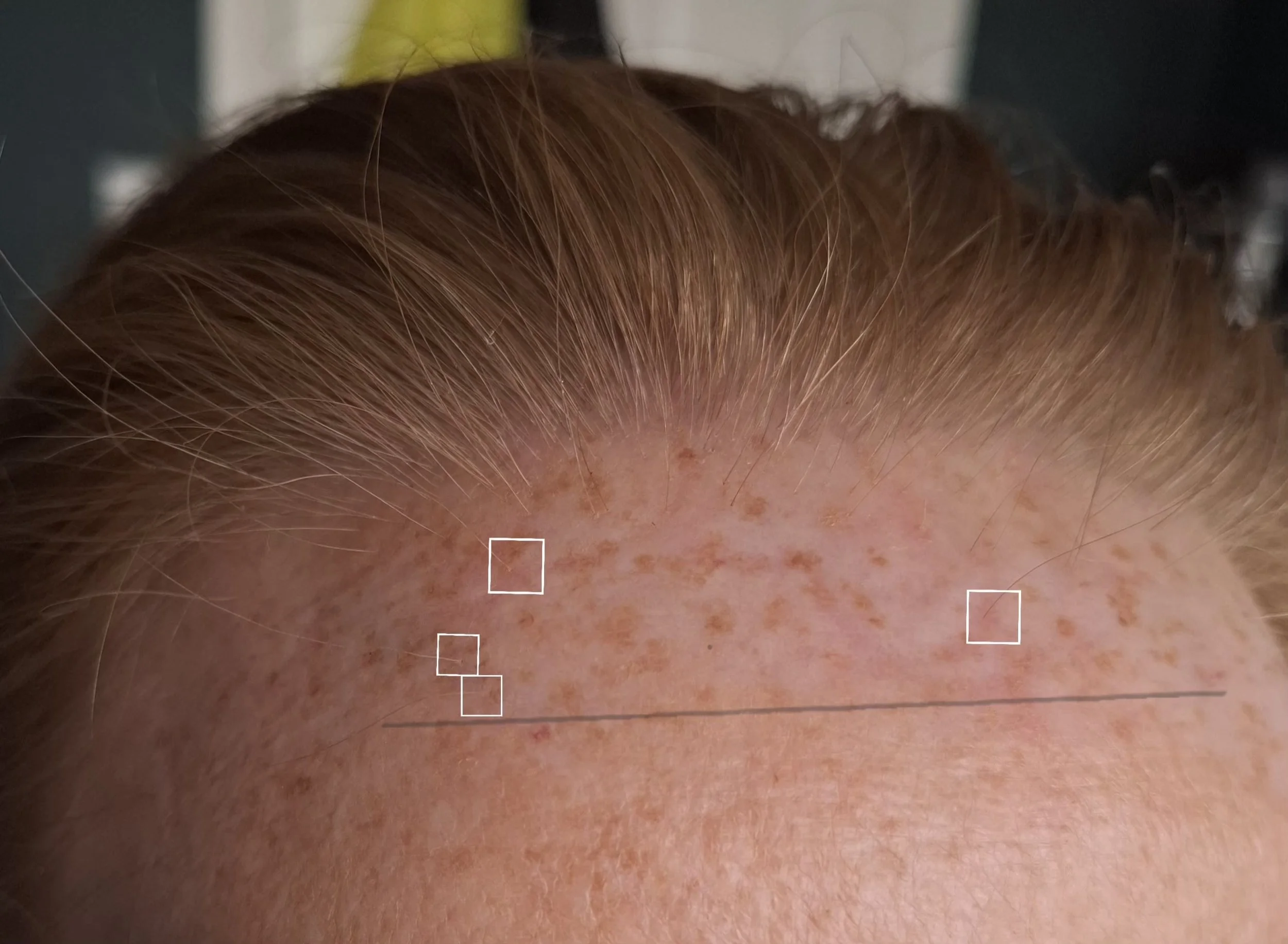
Frontal Fibrosing Alopecia (FFA)
The hairline shows noticeable recession. The black line indicates where the original hairline once was. The lighter skin tone marks areas of scarring where follicles have been lost, while the small white dots represent remaining active follicles along the original hairline.
Many people feel discomfort before they even notice the hair loss, itching, tenderness, or a burning sensation are common signs. Redness, flaking, or small pustules can also appear. Because this condition can progress silently, early assessment is vital. During my training, I’ve learned how important a detailed scalp examination is, and when necessary, referral to a dermatologist for a biopsy to confirm the diagnosis.
Even though lost hair can’t be restored, treatment can still make a huge difference. The goal is to calm inflammation and prevent further damage. This may involve prescription creams, soothing scalp treatments, and gentle cleansing routines that protect the scalp barrier. Nutrition and lifestyle changes also play an important part, something I’ve come to appreciate more deeply through my studies.
However, beyond the physical side, there’s also an emotional impact that’s often overlooked. Hair is tied to confidence and self-image, so losing it can feel deeply personal. Many clients describe feeling anxious or isolated, which is why empathy and honest conversation are so important. When someone truly understands what’s happening, they regain a sense of control and that can be just as healing as the treatment itself.
Learning about Cicatricial Alopecia has opened my eyes to how remarkable the scalp is and how much there is still to learn. Hair health isn’t just about appearance, it’s connected to our wellbeing, emotions, and overall health. As I continue my trichology journey, my goal is to bridge the gap between salon experience and science, helping clients find answers, care for their scalp, and feel supported every step of the way.
Every scalp tells a story, and sharing them helps others learn and feel understood. Have you noticed and change in your scalp and hair recently? I love to hear your thoughts or stories below.
Tschüß,
Carolin x